Top AP Automation Services for Enterprises: Features and Use Cases

Top AP Automation Services for Enterprises: Features and Use Cases

Manual invoice entry, email-based approvals, and fragmented payment runs quietly tax enterprise finance teams, adding days to cycle times and millions in avoidable cost. As volumes scale past 100,000 invoices annually, spreadsheets and shared inboxes simply cannot keep up without increasing headcount and control risk.

Modern AP automation services combine cloud platforms, managed workflows, and AI to digitize invoices, orchestrate approvals, and trigger compliant payments. Instead of keying line items or chasing approvers, teams supervise exceptions and analyze spend patterns. This shift turns accounts payable from a back-office cost center into a data-rich engine informing procurement, treasury, and FP&A decisions.

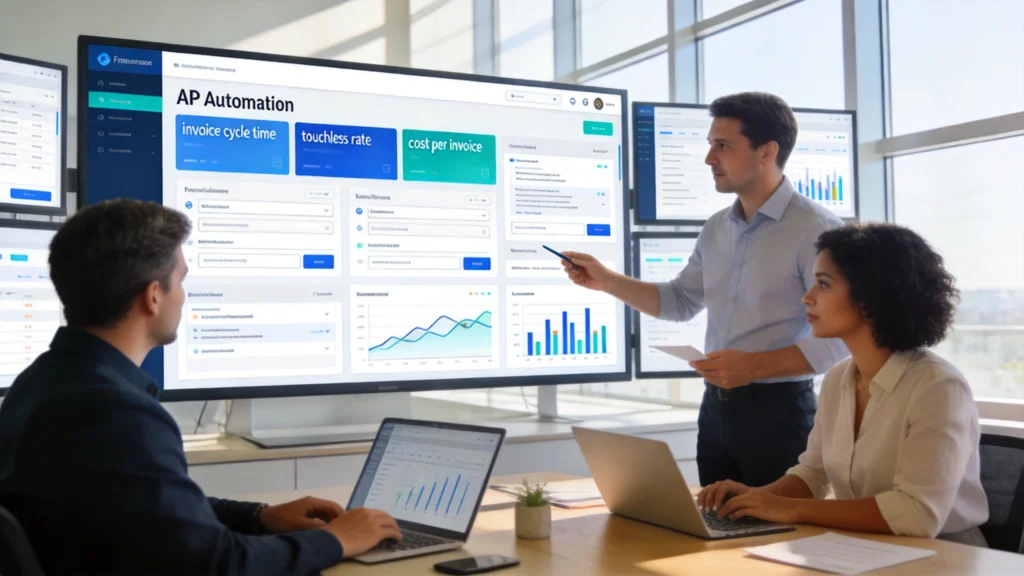
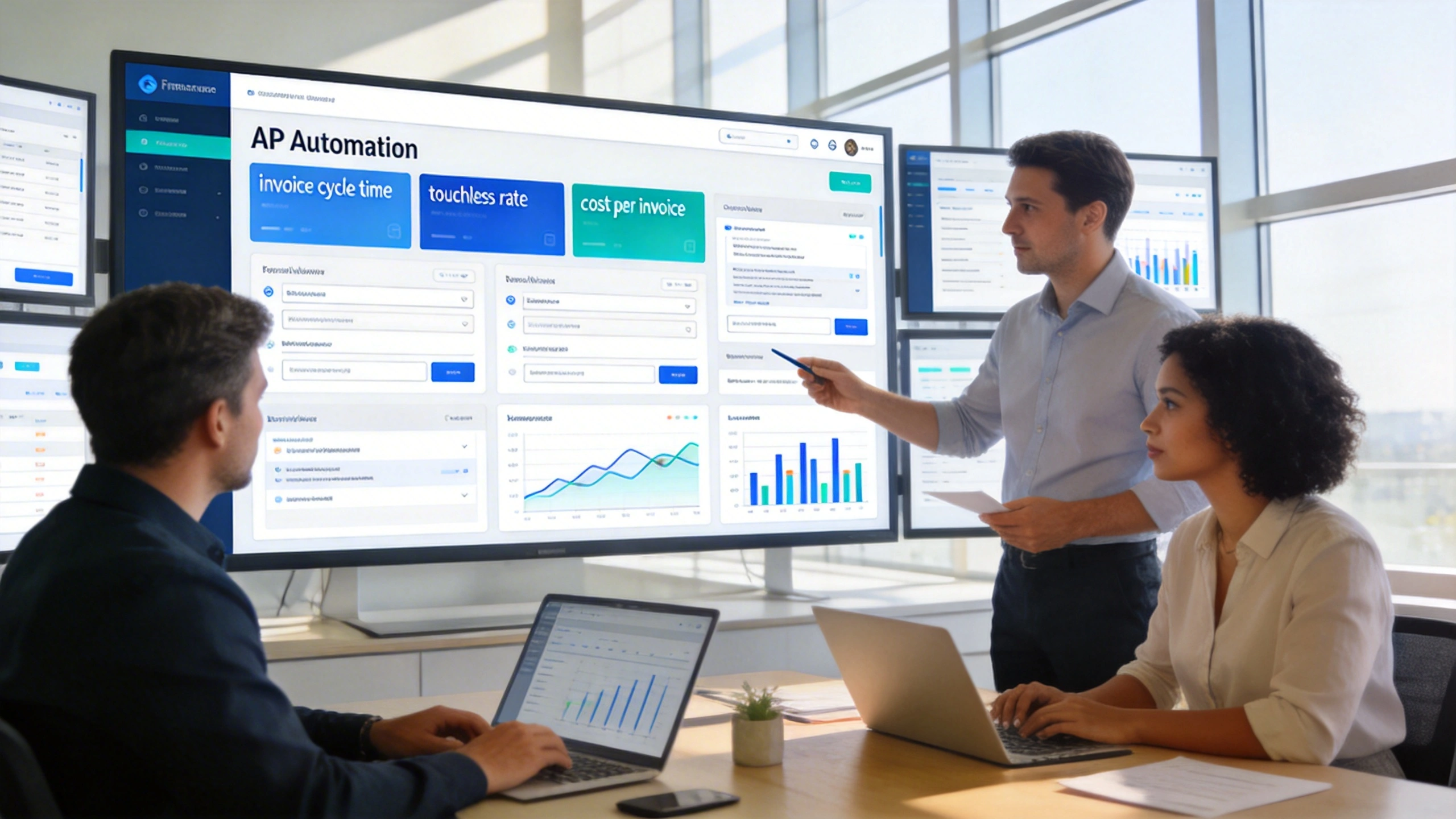
Enterprises adopting automation typically see processing costs drop from USD 10–15 per invoice to USD 2–4, while touchless rates exceed 60%. Cycle times compress from 20–25 days to under 7, enabling early-payment discounts and stronger supplier relationships. With embedded data analytics services, finance leaders gain real-time visibility into liabilities by vendor, region, and cost center.

For organizations running complex ERP landscapes, the challenge is choosing the right AP automation services model, integrating it cleanly, and leveraging capabilities like Azure AI services to handle diverse document formats, languages, and fraud risks. The following sections break down features, delivery models, evaluation criteria, and real-world enterprise use cases.

1
ap automation services

What Are AP Automation Services and Why Enterprises Need Them

What Are AP Automation Services and Why Enterprises Need Them

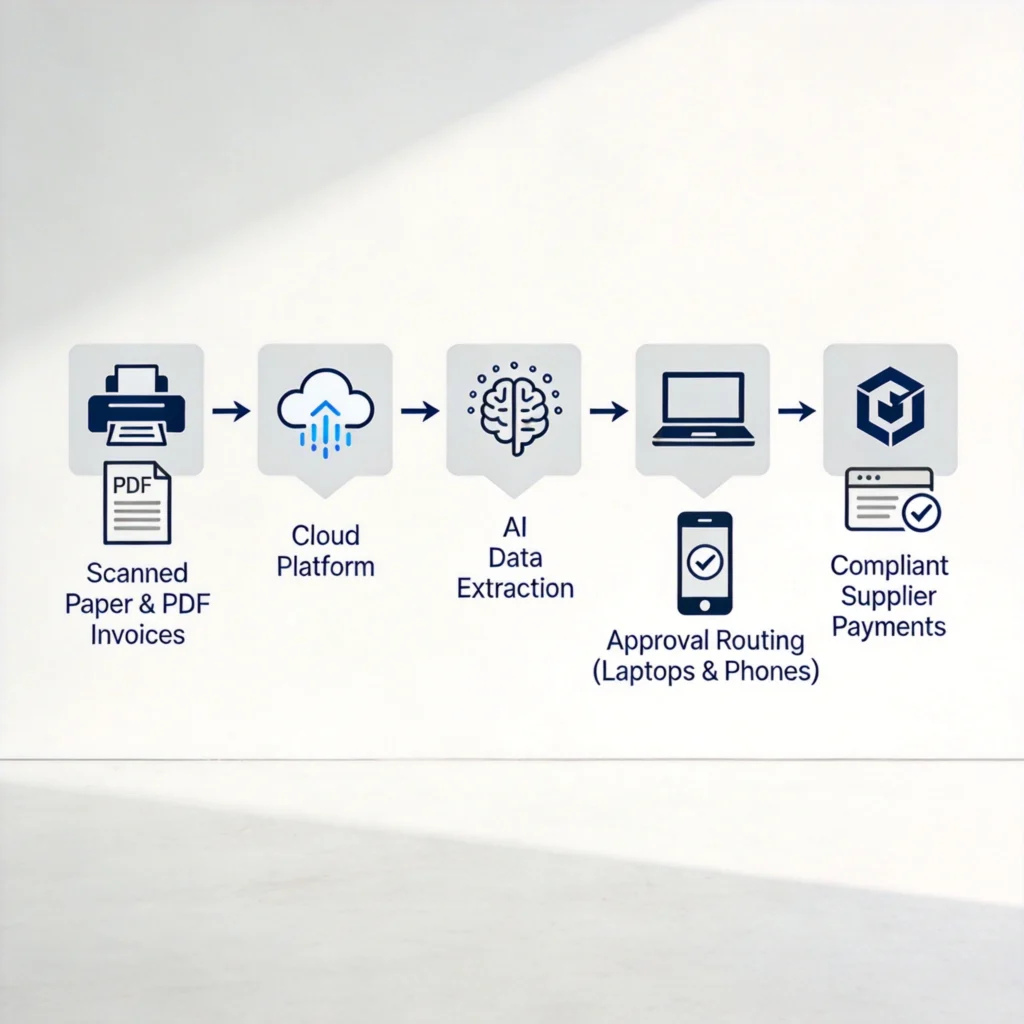
At its core, AP automation captures invoice data from multiple channels, validates it, and routes it through predefined approval workflows before triggering secure payments. Instead of rekeying line items or chasing signatures, teams oversee exceptions and monitor dashboards, ensuring invoices move smoothly from receipt to payment while maintaining compliance and auditability.

AP automation services are outsourced or cloud-delivered solutions that digitize invoice-to-pay workflows, from capture through payment and reconciliation. Instead of finance staff manually keying data into SAP or Oracle, invoices are ingested via email, EDI, or supplier portals, processed by OCR and validation rules, and routed automatically for approval based on pre-defined policies and spend thresholds.

Core AP Workflows Automated End-to-End

These services typically automate invoice capture, header and line-item extraction, PO and goods-receipt matching, approval routing, and payment file generation. For example, a 3-way match engine compares quantities and prices across purchase orders, receipts, and invoices, automatically clearing 70–80% of transactions. Exceptions like price variances above 5% are surfaced to buyers, reducing late payments and vendor disputes.

Business Outcomes Driving Enterprise Adoption

Enterprises pursue AP automation to cut processing costs, improve compliance, and unlock working-capital benefits. By standardizing workflows across regions, they reduce policy deviations and strengthen audit trails. Automated reminders and escalation rules shrink approval bottlenecks, while analytics on approval times, exception rates, and discount capture allow continuous improvement. These outcomes collectively support scalable growth without proportional increases in AP headcount.
2
ap automation

Key Features to Expect From Modern AP Automation Services

Modern AP automation services combine document intelligence, workflow orchestration, and integration capabilities. They ingest invoices in PDF, image, XML, or EDI formats and normalize them into structured data consumable by ERPs. Machine learning models continuously improve recognition accuracy, while configurable business rules enforce tax, coding, and approval policies across entities, currencies, and languages.

Key Features to Expect From Modern AP Automation Services

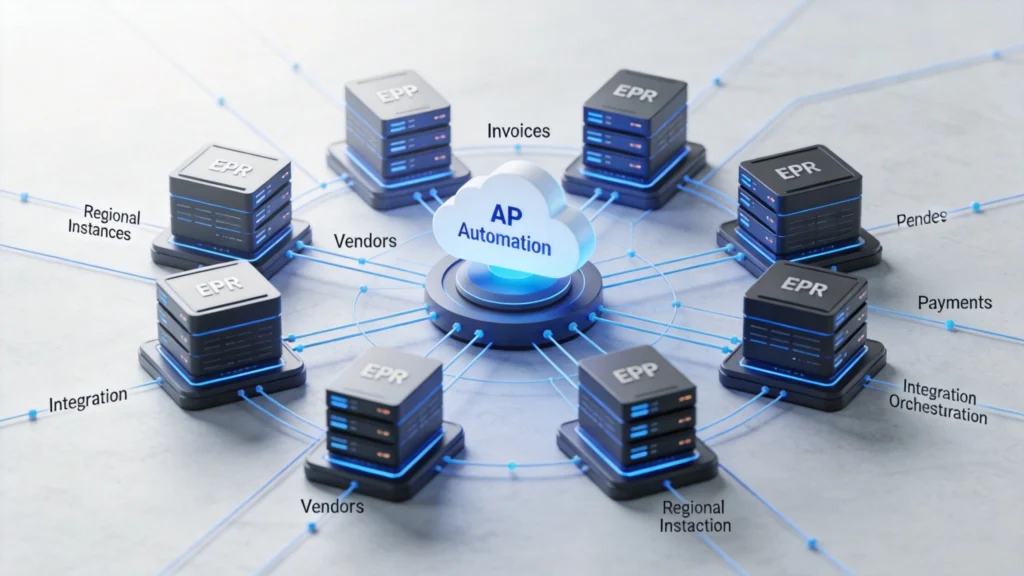
Large enterprises often operate several ERP systems across regions and business units, making AP automation more challenging. A centralized AP automation hub can normalize invoice data, apply consistent policies, and feed summarized information back into each ERP. This approach supports global visibility while respecting local tax, compliance, and process requirements.

Foundational Capabilities Across the Invoice-to-Pay Lifecycle

Foundational features include AI-powered invoice capture, PO and non-PO handling, dynamic approval workflows, and automated payment file creation for multiple banks. Vendors like Coupa, Basware, and SAP Concur typically achieve 85–95% header-field accuracy after training on 5,000–10,000 invoices. Integration adapters push validated data into ERPs within seconds, eliminating manual posting and reducing duplicate payments.

Advanced Intelligence, Compliance, and Analytics Layers

Advanced capabilities layer in duplicate detection, tax validation, and real-time dashboards that feed into enterprise data analytics services. For example, anomaly detection flags invoices 30% above historical averages for a category, while embedded policy checks verify VAT IDs against official registries. Role-based analytics expose KPIs by business unit, enabling CFOs to benchmark performance and prioritize process improvements globally.

3

Top AP Automation Services Models: SaaS, Managed, and BPO

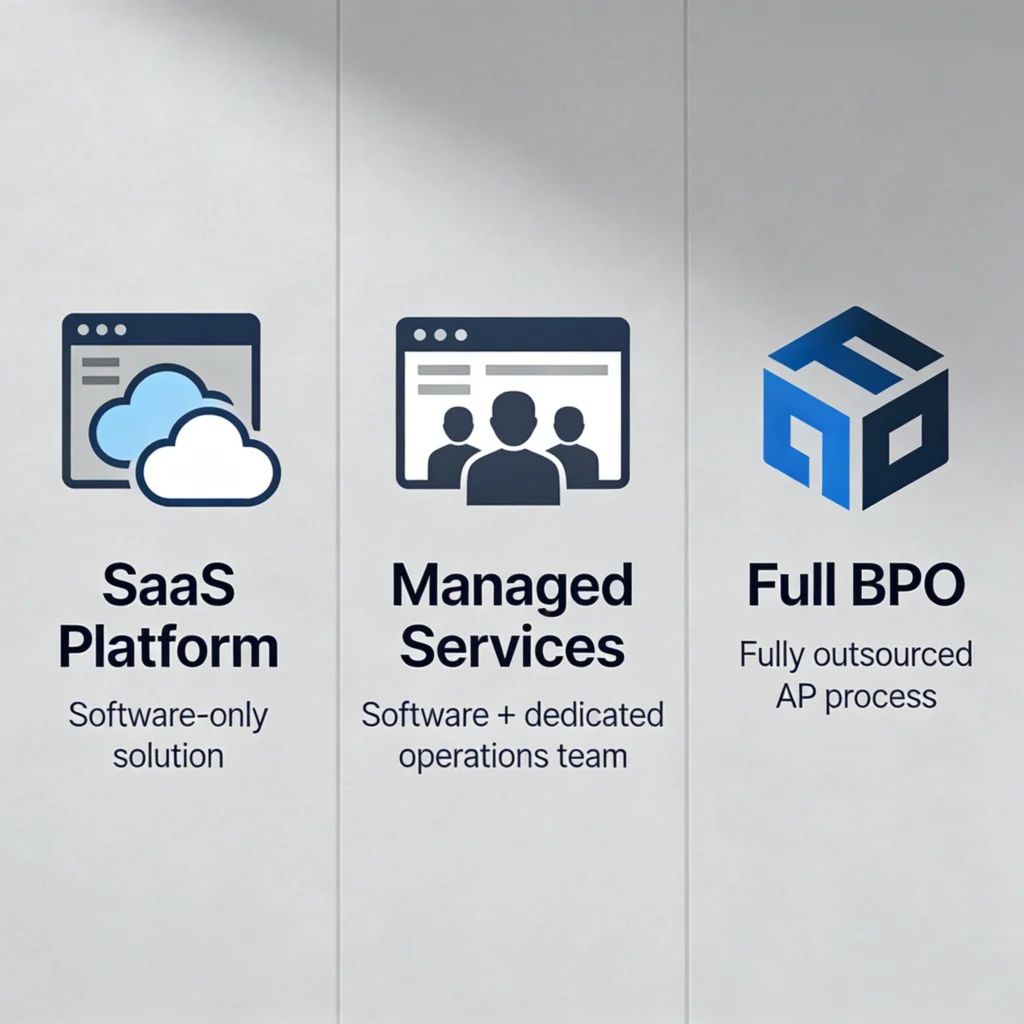
Enterprises can consume AP automation as pure SaaS, managed services, or full business process outsourcing (BPO). The right model depends on transaction volumes, internal capabilities, and appetite for operational ownership. Each model offers different trade-offs around control, scalability, cost structure, and reliance on vendor staff versus internal finance teams.

Top AP Automation Services Models: SaaS, Managed, and BPO

Enterprises can adopt AP automation through different service models. A pure SaaS approach suits organizations with strong internal process ownership, while managed services add external specialists to run day-to-day operations. Full BPO goes further by outsourcing most AP activities, ideal for companies seeking maximum standardization and aggressive cost reduction.

Comparing Service Delivery Models and Typical Use Cases

The table below contrasts common AP automation services models across cost, ownership, and scale considerations. It helps finance leaders align operating model choices with strategic priorities such as standardization, regional coverage, and speed of transformation. Data reflects typical enterprise deployments handling 200,000–2,000,000 invoices annually across multiple business units and geographies.

ModelTypical Monthly Cost (250k invoices/year)Ownership of StaffImplementation TimelineBest Fit Scenario
SaaS PlatformUSD 20,000–40,000 subscriptionInternal AP team4–6 monthsEnterprises wanting control, strong internal CoE, multi-ERP integration.
Managed ServicesUSD 40,000–80,000 bundledVendor operates workflow3–5 monthsOrganizations seeking standardization with limited process expertise in-house.
BPO with PlatformUSD 80,000–150,000 all-inVendor owns operations6–9 monthsHigh-volume, multi-country AP looking to offload operations and gain SLAs.
Hybrid (SaaS + CoE)USD 30,000–60,000 subscriptionShared between vendor and CoE5–7 monthsGlobal firms centralizing strategy but retaining regional execution control.
Regional BPO PodsUSD 50,000–90,000 per regionVendor regional teams6–10 monthsEnterprises with strict local regulations and language-specific processing.

SaaS-first models suit organizations with strong internal governance and change-management capabilities, while BPO models appeal where leadership prioritizes rapid cost takeout and standardized SLAs. Managed services often strike a balance, with vendors running day-to-day processing while enterprises retain policy control and oversight via dashboards and structured governance forums.

4

AP Automation Services for Complex Enterprise ERP Landscapes

Large enterprises frequently operate multiple ERPs—such as SAP ECC, S/4HANA, Oracle E-Business Suite, and Microsoft Dynamics—alongside procurement platforms like Ariba or Coupa. AP automation services must integrate with these systems reliably, handling different chart-of-accounts structures, tax configurations, and master data models without duplicating logic or compromising data quality.

AP Automation Services for Complex Enterprise ERP Landscapes

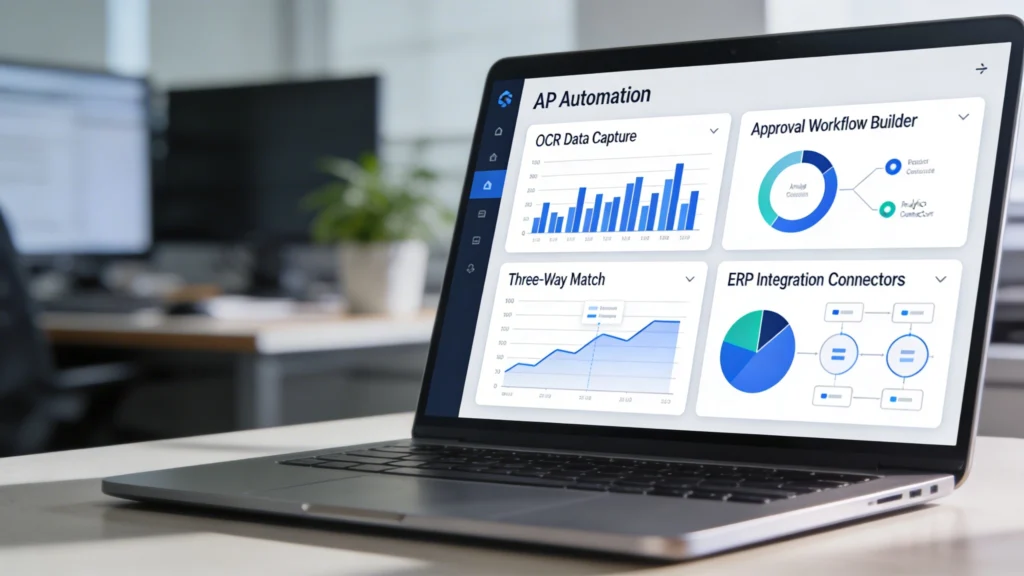
Modern AP automation services bundle capabilities such as AI-powered data capture, configurable approval workflows, three-way matching, and embedded analytics. Combined with tight ERP integration, these features reduce manual touchpoints and errors while enabling finance teams to monitor spend patterns, track pending liabilities, and enforce policy controls across business units and regions.

Designing Robust Integration Patterns Across Systems

Successful deployments use standardized APIs, middleware like MuleSoft or Azure Integration Services, and canonical data models. Invoices are normalized once, then routed to the appropriate ERP based on company code or business unit. Real-time status updates flow back, enabling AP teams to track posting, payment, and error states centrally. This architecture minimizes point-to-point integrations and accelerates onboarding of new entities.

Managing Data Quality, Security, and Governance

Enterprises must align vendor master data, tax codes, and GL mappings across systems to avoid mismatches and posting errors. Role-based access controls ensure only authorized users can approve invoices above certain thresholds or modify bank details.
“Centralized logging and audit trails across AP and ERP platforms reduce investigation time for disputes by 40–60%, strengthening both compliance and supplier trust.” Data retention policies must also align with local regulations such as GDPR.

5
azure ai services

Using Azure AI Services to Enhance AP Automation Services

Azure AI services provide prebuilt and customizable models that significantly improve invoice capture accuracy, anomaly detection, and fraud prevention. By embedding Azure Document Intelligence, Cognitive Services, and Azure Machine Learning into AP automation services, enterprises handle diverse formats and languages while continuously improving performance based on feedback loops from AP analysts and auditors.

Using Azure AI Services to Enhance AP Automation Services

Document Understanding and Intelligent Invoice Capture

Azure Document Intelligence (formerly Form Recognizer) extracts headers, line items, tax details, and payment terms from PDFs, images, and scanned documents. Custom models trained on 500–1,000 sample invoices often reach 95–98% field-level accuracy. Confidence scores determine whether invoices auto-post or route for manual review, enabling higher touchless processing rates without compromising data integrity or compliance controls.

  • Prebuilt invoice models support multiple languages, handling European, US, and APAC formats with minimal configuration effort.
  • Custom models learn supplier-specific layouts, improving recognition for complex tables and multi-page invoices over time.
  • Confidence thresholds (e.g., 0.92) trigger exception queues, balancing automation with targeted human review capacity.
  • Integration via REST APIs or Logic Apps enables near real-time processing within existing AP workflows and ERPs.

Anomaly Detection, Fraud Signals, and Data Analytics Services

Azure AI anomaly detection models analyze invoice amounts, frequencies, and vendor patterns to flag unusual transactions. Combined with enterprise data analytics services on Azure Synapse or Power BI, finance teams visualize spend anomalies by region or vendor tier. Models can highlight risks such as sudden 40% price jumps, duplicate bank accounts, or payments to blacklisted entities, enabling proactive intervention.

6

Evaluating AP Automation Services Vendors: Criteria and Shortlist Tips

Evaluating AP Automation Services Vendors: Criteria and Shortlist Tips

Evaluating AP automation services requires balancing functional depth, integration fit, and operating model flexibility. Enterprises should define clear objectives—such as reducing processing costs by 40% or achieving 70% touchless rates—then assess vendors against measurable criteria. This approach avoids feature checklists and focuses on outcomes aligned with finance and procurement strategies.

Key Evaluation Dimensions and Quantitative Benchmarks

Core criteria include scalability to millions of invoices annually, native connectors to core ERPs, and support for regional tax regimes. Vendors should demonstrate average implementation timelines under nine months for multi-country rollouts and provide uptime SLAs of at least 99.5%. Reference customers with similar complexity offer insight into real-world performance, adoption, and change-management support.

  • Ask for benchmark data: average invoice cycle times, touchless rates, and exception percentages across comparable clients.
  • Evaluate analytics: availability of embedded dashboards, export to data lakes, and integration with existing BI platforms.
  • Assess compliance: SOC 2, ISO 27001, data residency options, and audit trail depth for regulators and internal audit.
  • Review support: 24/7 coverage, multilingual service desks, and dedicated customer success or process excellence teams.

Building a Targeted Shortlist and Running Pilots

Shortlists should include two to three vendors per service model—SaaS, managed, and BPO—mapped to strategic scenarios.
“Running 8–12 week pilots on a subset of entities, with 10,000–20,000 invoices, reveals data quality issues, integration gaps, and user adoption barriers before full-scale rollout.” Clear success metrics and exit criteria ensure pilots generate evidence rather than just demonstrations.

7

Real-World Use Cases of AP Automation Services in Large Enterprises

Real-world deployments illustrate how AP automation services transform finance operations beyond incremental efficiency gains. Global manufacturers, retailers, and technology companies have used automation to centralize processing, improve supplier experiences, and unlock cash-flow benefits. These examples show measurable impacts across cost, speed, compliance, and data visibility when automation is combined with process redesign.

Real-World Use Cases of AP Automation Services in Large Enterprises

Global Manufacturer Standardizing Across Regions

A European-based manufacturer processing 1.2 million invoices annually implemented a SaaS AP automation platform integrated with SAP and Oracle. Within 18 months, they cut average processing cost from USD 11.50 to USD 3.80 per invoice and achieved 68% touchless processing. Early-payment discount capture increased by 35%, adding roughly USD 4 million annually to operating profit through improved working-capital management.

Retailer Leveraging Azure AI Services and Analytics

A North American retailer with 4,000 stores used Azure AI services for invoice capture and anomaly detection across 800,000 invoices per year. Data fed into Power BI dashboards, enabling category managers to spot price drift and duplicate billing.
“They reduced invoice-related fraud losses by 45% within a year and shortened dispute resolution times from 20 days to 7.” These gains supported tighter supplier negotiations and better margin control.

8

Future of AP Automation Services: From Automation to Autonomous Finance

Future of AP Automation Services: From Automation to Autonomous Finance

The future of AP automation services moves beyond digitizing existing workflows toward autonomous finance, where systems make routine decisions without human intervention. Advances in AI, real-time payments, and embedded analytics enable platforms to optimize payment timing, dynamically manage working capital, and continuously refine approval policies based on risk signals and business outcomes.

AI-Driven Decisioning and Touchless Processing

Next-generation platforms will use reinforcement learning to adjust approval thresholds and routing logic automatically. For example, low-risk, low-value invoices from trusted suppliers could achieve 90%+ touchless rates, while high-risk categories receive additional scrutiny. Models will incorporate external data—such as credit scores and sanctions lists—to refine risk scoring, further shrinking manual workloads for AP teams.

Integrated Cash Management and Cross-Functional Analytics

AP data will increasingly feed into real-time cash forecasting, treasury management, and supplier financing programs.
“By connecting AP automation services with treasury and procurement analytics, enterprises can simulate payment scenarios and optimize days payable outstanding without damaging supplier relationships.” This convergence of automation, Azure-based data analytics services, and AI will gradually shift finance teams from transaction processing to strategic decision orchestration.

“We help businesses construct intelligent digital futures. Contact us today — we’ll recommend the best transformation strategy.”

Office
8621 201 St Suite 240, Langley Twp, BC V2Y 0G9
Phone:  
+1 (672)-232-0498
ZA Technologies
Privacy Overview

This website uses cookies so that we can provide you with the best user experience possible. Cookie information is stored in your browser and performs functions such as recognising you when you return to our website and helping our team to understand which sections of the website you find most interesting and useful.