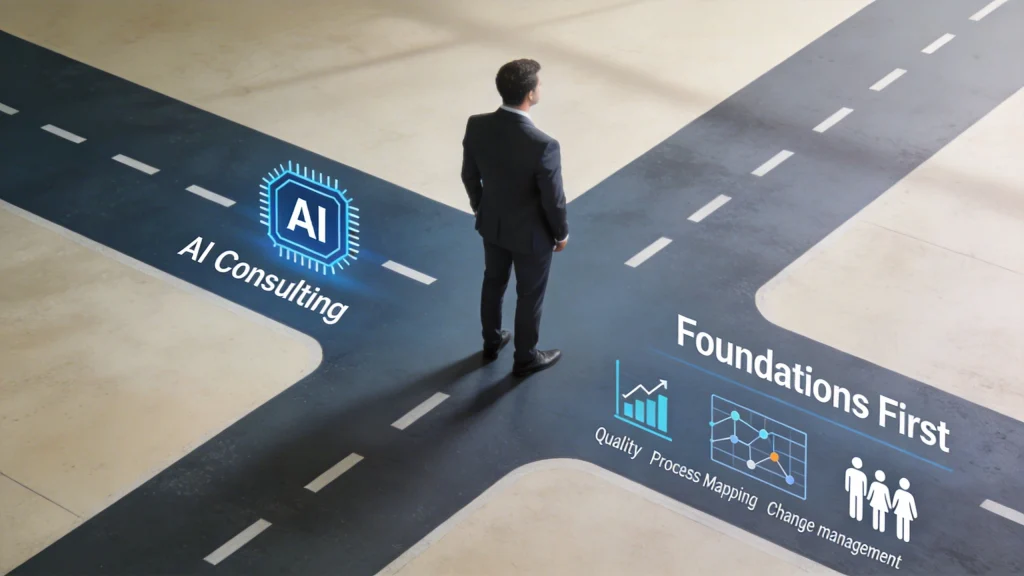

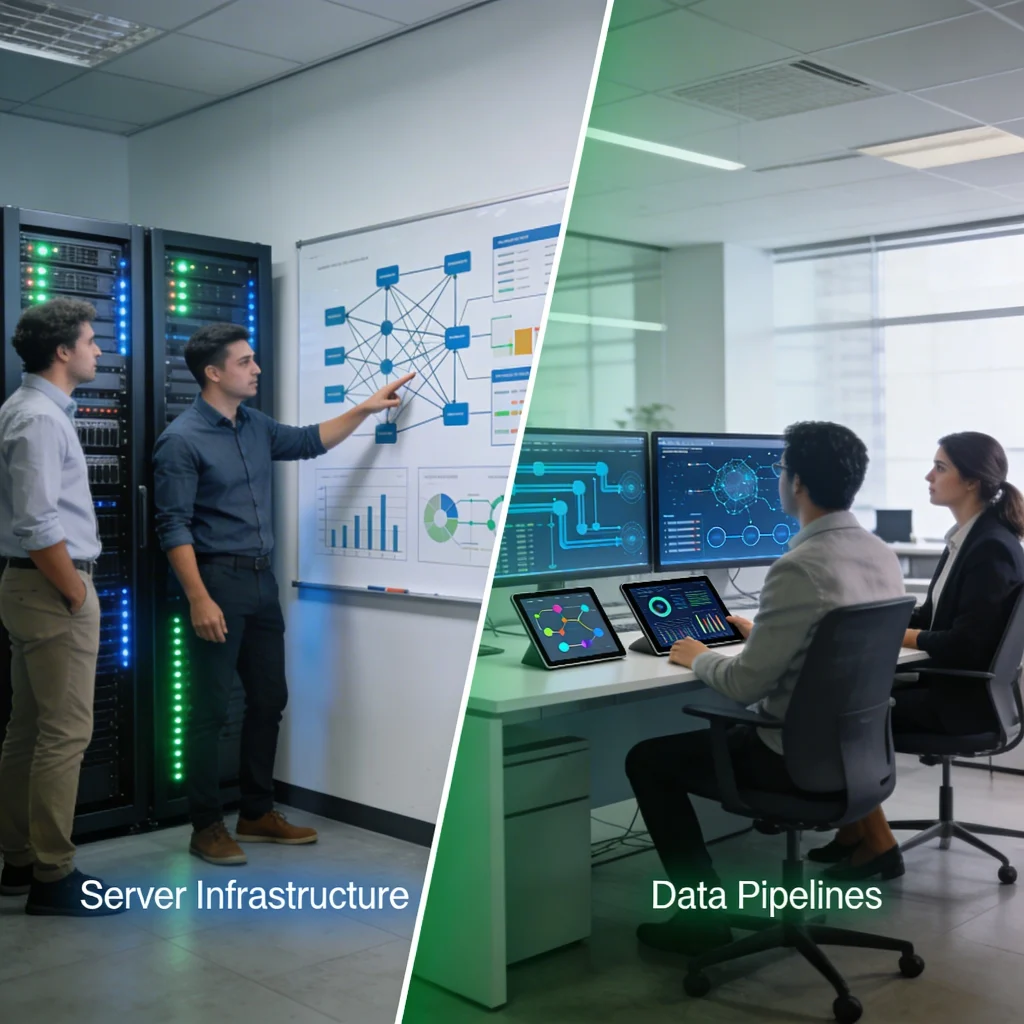
AI consulting differs from traditional IT consulting by focusing less on infrastructure rollouts and more on identifying high-value use cases and data-driven opportunities. While IT teams keep systems running, AI consultants examine workflows, data assets, and decision points to determine where machine learning and automation can meaningfully improve performance and outcomes.
AI consulting focuses specifically on identifying, designing, and deploying machine‑learning and generative‑AI solutions that create business value. While IT consulting typically optimizes infrastructure, ERPs, or cloud migrations, AI consultants concentrate on data, models, and decision flows. They combine data science, software engineering, and change management to move from proof‑of‑concept to production systems supporting thousands of daily decisions.
Core Scope of AI Consulting Services
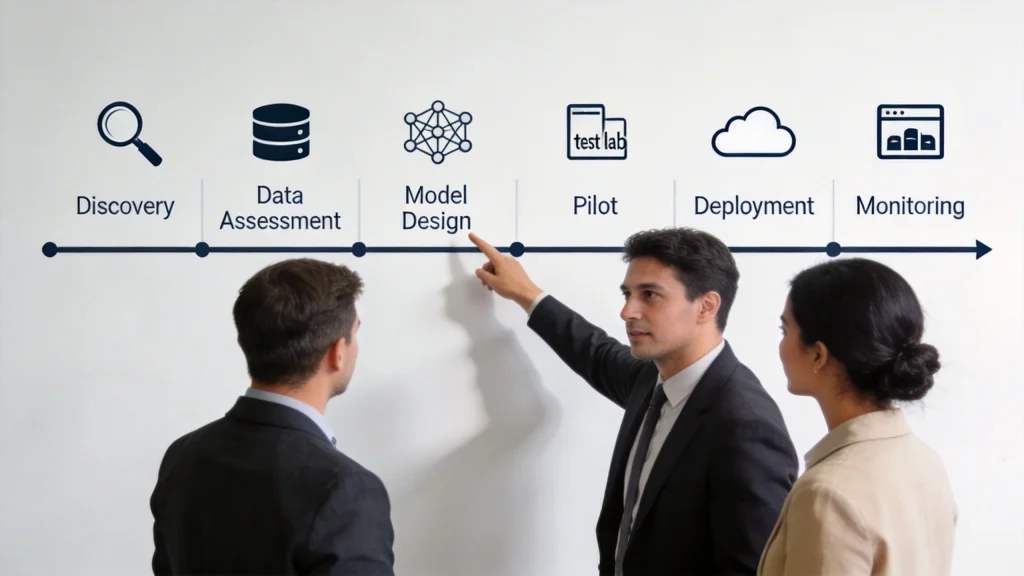
AI consultants begin by clarifying value hypotheses, such as reducing claims handling time by 30% or increasing cross‑sell revenue by 8%. They analyze historical data quality, label availability, and process bottlenecks, then propose suitable techniques like gradient‑boosted trees, transformer models, or recommendation systems. Unlike generic advisors, they design end‑to‑end pipelines, monitoring, and feedback loops that keep models accurate as data drifts.
How AI Consulting Differs from Traditional IT Consulting
Traditional IT consulting often focuses on deterministic workflows, where rules and outcomes are predefined and tested exhaustively. AI consulting accepts probabilistic outputs, so consultants design confidence thresholds, human‑in‑the‑loop reviews, and model retraining schedules. They also address ethical constraints, explainability requirements, and regulatory expectations, which are rarely central in standard ERP rollouts or network upgrades.