

If your online store slows down as traffic picks up—or checkout becomes a bottleneck—you’re not alone. Many ecommerce businesses hit scaling limits as they grow. This isn’t about marketing or product issues; it’s about weak architecture and broken checkout flows.
This post explains why scaling problems occur and how better ecommerce website development choices can keep your store fast, stable, and ready for growth.

1. Architecture: When Your Online Store Backend Can’t Keep Up
Scaling isn’t something you bolt on later. It has to be built into your online store from the start, or it will fail under real demand.
Traffic Spikes That Break Everything
When a sale or promotion drives sudden traffic, weak systems reveal themselves. Slow pages, inventory errors, and failed requests show your backend isn’t built for heavy load.
Monolithic vs Modular Systems
Many stores begin with a monolithic structure where everything—catalog, cart, checkout—runs in a single application. This limits scalability. Separating these parts into modular services allows each to scale independently as your online store grows.
Caching, Queues & Load Balancing Are Must-Haves
- CDNs reduce load on servers by caching product images and static assets.
- Redis or Memcached store cart sessions and speed up data retrieval.
- Background queues handle non-critical tasks like emails, analytics, and invoicing.
- Load balancers spread traffic across multiple servers, preventing overload.
Without these elements, even moderate growth can overwhelm your online store.
2. Checkout Bottlenecks: Where Your Funnel Breaks
Your checkout process is where revenue is either secured or lost. A slow or error-prone checkout directly hurts conversions.
Abandonment from Poor Checkout Flow
Shoppers abandon carts if the checkout is too long or fails at any step. Long forms, missing autofill, and technical glitches drive users away before they pay.
Payment Throughput Limitations
A single payment gateway or poorly optimized payment logic can fail during traffic spikes. Adding backup gateways and failover handling prevents downtime at critical moments.
Inventory Errors & Race Conditions
If two customers try to buy the last product at the same time, your system must handle it correctly. Using distributed locks and real-time inventory sync avoids overselling or duplicate orders.
Request Queuing for Stability
When many users hit checkout at once, queuing incoming requests keeps the process smooth. Without queues, your online store risks crashes and failed transactions.
3. Signs Your Online Store Isn’t Scaling
You’ll know your online store architecture needs work if you notice:
- Slower pages during peak hours
- Checkout errors or abandoned orders during high demand
- Admin dashboards or order processing tools failing under load
- Cart or payment issues during traffic spikes
These symptoms indicate that scaling strategies are missing or incomplete.
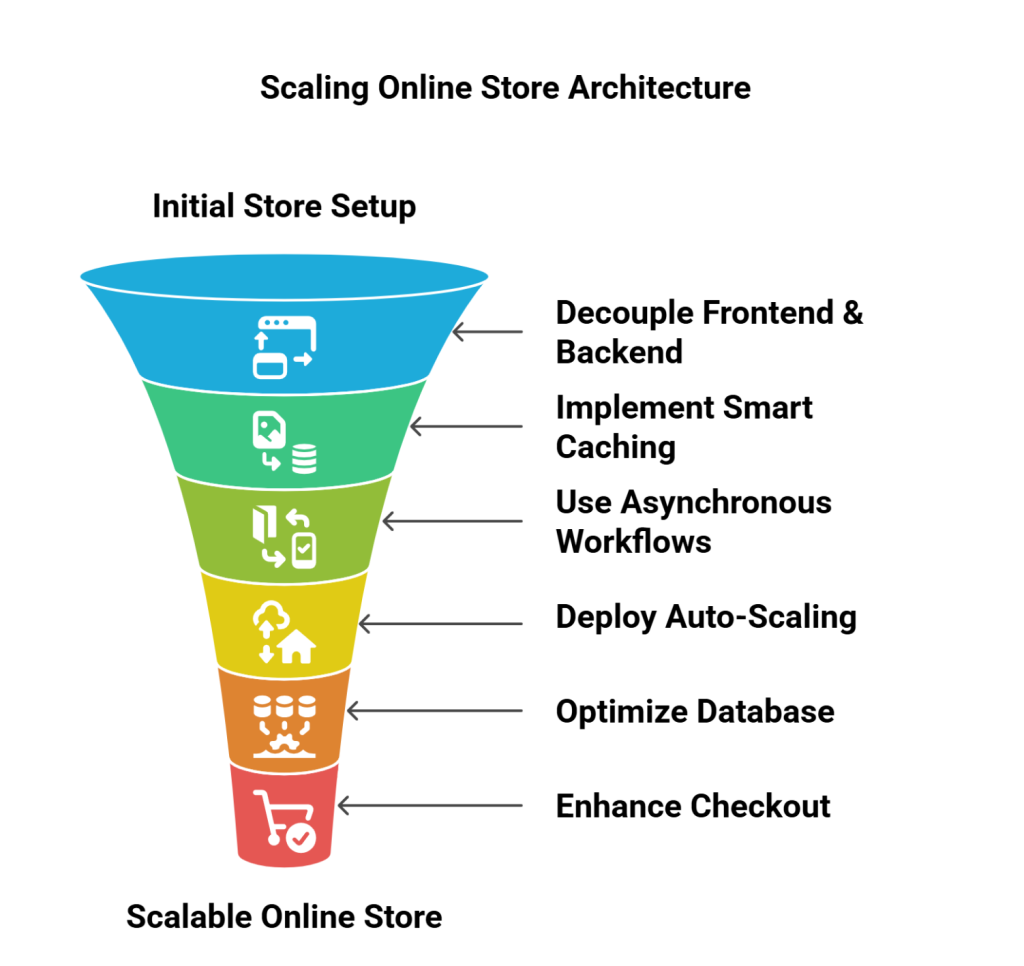
4. Building a Scalable Online Store Architecture
Scaling requires planning. Here’s how to prepare your online store for growth:
Decouple Frontend & Backend
Using a headless or API-first architecture separates traffic-heavy storefront requests from the backend, ensuring stability during spikes.
Smart Caching Strategy
- Serve static assets via CDN.
- Cache cart sessions and pricing data.
- Keep frequently accessed product data in memory for quick loading.
Asynchronous Workflows
Move non-essential operations—emails, loyalty updates, analytics—into background job queues so they don’t slow down checkout.
Auto-Scaling & Load Balancing
Deploy infrastructure that scales automatically during traffic surges. Load balancers route traffic evenly and maintain uptime.
Database Optimization
Sharding, indexing, and using replicas reduce database strain, preventing slowdowns as orders increase.
Checkout Built for Scale
- Tokenized payments ensure security and speed.
- Request queues maintain order during high volume.
- Fallback logic ensures payments complete even if third-party tools fail.
5. Case Example: Fixing a Broken Checkout Under Load
One lifestyle brand struggled with flash sales. Their monolithic build couldn’t handle traffic, leading to crashes at checkout. By introducing caching, job queues, Redis carts, and load balancing, their online store scaled to handle 5× traffic without errors. Checkout completion improved by 20%—and revenue followed.
6. Common Pitfalls That Stop Scaling
Businesses often ignore these critical factors:
- Coupling frontend and backend into one system that breaks under load
- Relying on plugins without load testing
- Using local sessions that fail when servers scale
- Skipping queue systems for order handling
These mistakes can stop an online store from growing, no matter how much traffic marketing generates.
Conclusion: Build Your Online Store to Grow
Scaling problems aren’t solved by spending more on ads or redesigning your homepage. They’re solved by strengthening architecture and checkout systems so they can handle real demand.
If your online store slows down or loses sales during peak traffic, it’s time to upgrade how it’s built. Smarter architecture—caching, load balancing, tokenized checkout, and modular design—turns growth into profit, not downtime.
Want a store that scales without breaking? Explore our Ecommerce Development Services. We build online stores that stay fast, stable, and ready to sell—no matter how much you grow.